2026 Best HEPA Filter for Furnace Which One Should You Buy?

Time:2026-11-08 Author:Aria
0%

Choosing the 2026 best HEPA filter for a furnace is not as simple as picking the filter with the highest rating. Your furnace needs compatible dimensions, a well-sealed fit, and enough airflow to heat your home properly. A filter that traps fine particles but strains the blower may create a different problem. Check your furnace manual before comparing products.

Indoor-air researcher Dr. Jeffrey Siegel’s work highlights why filtration and airflow must be considered together. A practical paraphrase of that principle is: “A filter works only when air can pass through it.” That is useful context, not a product endorsement or a direct quotation. Also, many residential furnaces are designed for specific filter types and resistance levels; a true HEPA filter may not be a drop-in replacement. Measure the filter slot, note the model number, and ask an HVAC professional when compatibility is unclear.

This guide compares options by fit, filtration claims, airflow considerations, maintenance, and value. Look for clear specifications, not just a bold “HEPA” label. A filter should sit snugly, without visible gaps along its edges. Small details matter. Still, product listings rarely tell the whole story, and real homes differ in duct condition, furnace age, pets, and dust levels. The right choice is the one your system can safely use and you can replace on schedule. There is no perfect pick for every house.
2026 Best HEPA Filter for Furnace Which One Should You Buy?

What a HEPA Filter Does in a Furnace System

A HEPA filter captures particles; it does not make a furnace produce cleaner air by itself. The U.S. Environmental Protection Agency defines HEPA performance as removing at least 99.97% of particles 0.3 microns in size under test conditions. That includes many fine particles, such as some dust and smoke. Real homes are less controlled. Air can leak around a filter, and performance depends on installation.

In a furnace system, air must pass through the filter without straining the blower or reducing needed airflow. Many standard furnaces are not designed for the resistance of a dense HEPA filter. The U.S. EPA advises choosing the highest-efficiency filter the system can accommodate, while ASHRAE guidance emphasizes proper fit and airflow. A poorly matched filter can make a system work harder. Not automatically better. Check the furnace manual and ask a qualified HVAC professional to measure pressure or confirm compatibility before changing filter type.

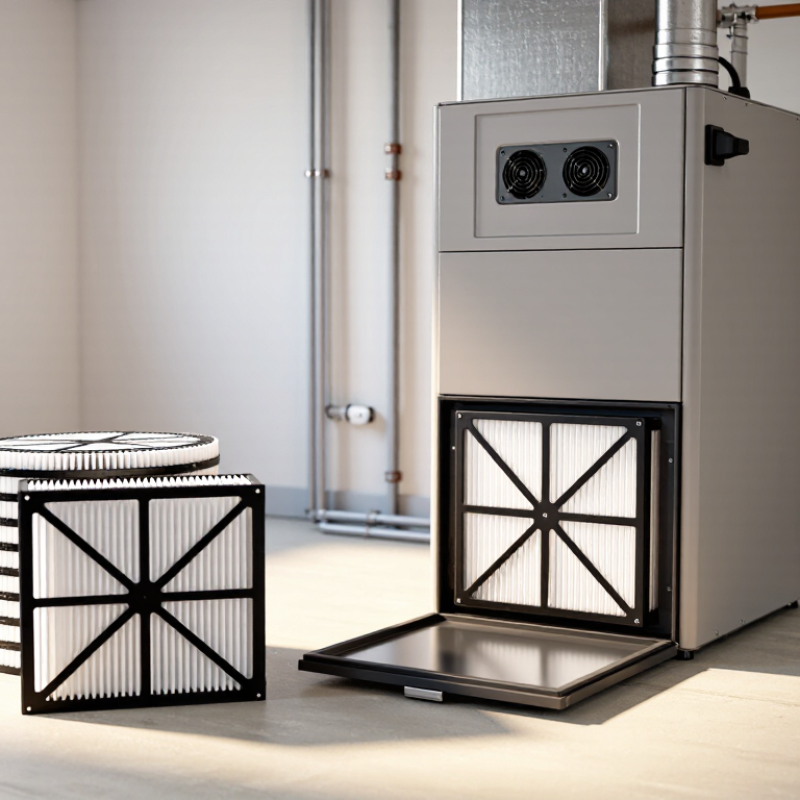
HEPA filtration is sometimes installed in a separate bypass unit, which draws a portion of circulating air through its own filter. This can offer high particle removal without forcing all furnace airflow through a restrictive filter. The trade-off is added equipment, maintenance, and cost. It is also easy to focus on the filter rating and overlook gaps around the frame. A careful fit matters. So does replacing or cleaning the filter on schedule. These details may feel less impressive than a headline number, but they shape what the system actually delivers.

How Furnace Compatibility and Airflow Affect HEPA Filter Use

A HEPA label does not guarantee a furnace-ready filter. The U.S. Environmental Protection Agency’s Guide to Air Cleaners in the Home says HEPA filters capture at least 99.97% of particles measuring 0.3 microns. That figure describes filtration efficiency, not how much resistance the filter adds to a furnace’s airflow. Airflow is the catch.

ASHRAE Standard 52.2 rates filters by particle-size efficiency. Under its test method, MERV 13 filters must capture at least 50% of particles from 0.3 to 1 micron. A dense HEPA filter may create more resistance than a standard furnace cabinet can handle. The result can be weak airflow, more blower strain, or heating cycles that stop too soon. Fit matters.

Check the furnace manual for permitted filter types and maximum pressure drop before buying. Measure the filter slot; a small gap can let air bypass the media. If the manual is unclear, an HVAC technician can measure static pressure with the filter installed and compare it with the equipment’s limit. It is easy to focus on particle capture and miss this part. A high-efficiency filter that restricts airflow may perform poorly in the system that matters most: yours.

Which Filter Features Matter for Home Heating

For furnace heating, a useful filter must clean the air without restricting airflow. Start with fit, not the word HEPA. Measure the existing filter slot and check the furnace manual for approved thickness and pressure limits. A filter that bows or leaves gaps lets dust bypass it. I would not chase the highest rating blindly.

The U.S. Environmental Protection Agency’s Guide to Air Cleaners in the Home reports that MERV 13–16 filters capture at least 50% of particles sized 0.3–1 micrometers, 85% of 1–3 micrometer particles, and 90% of 3–10 micrometer particles. These figures come from standardized testing, not a promise of identical results in every home. ASHRAE Standard 52.2 defines the MERV test method across particle-size ranges. For many furnaces, the EPA advises using MERV 13, or the highest-rated filter the system can accommodate. Check the filter’s pressure-drop data, especially if the blower already struggles. A true HEPA filter may need a dedicated housing and stronger fan. Keep the receipt. Watch for weak airflow, unusual noise, or rooms taking longer to warm; those clues deserve attention, even when the filter label looks impressive.

Comparing Furnace-Compatible HEPA Filter Options

Comparing furnace-compatible HEPA options starts with an important distinction: a true HEPA filter is not usually a simple furnace-filter swap. The U.S. Department of Energy defines HEPA performance as removing at least 99.97% of particles at 0.3 microns. That figure describes the filter, not what an unmodified furnace can handle. Dense media can restrict airflow, strain a blower, and reduce heating or cooling performance. A label alone is not enough.

For many homes, a deep-pleated MERV 13 filter may be the more practical choice, if the system supports it. The EPA’s Guide to Air Cleaners in the Home advises using MERV 13, or the highest rating the HVAC system can accommodate. ASHRAE Standard 52.2 provides the test method behind MERV ratings, helping buyers compare particle-removal performance. A dedicated HEPA unit connected to ductwork can offer higher filtration, but needs proper sealing and airflow design. Check the furnace manual or ask an HVAC professional before upgrading. I would not assume a tighter filter is automatically better.

Tips: Measure the existing filter, check its airflow rating, and inspect it monthly at first. Dusty pleats or weak airflow are warning signs. If you are unsure, request a pressure-drop check; it can reveal a mismatch before comfort suffers.

2026 Best HEPA Filter for Furnace Which One Should You Buy? - Comparing Furnace-Compatible HEPA Filter Options
Filter option Efficiency / rating Furnace compatibility Best suited for Key considerations Overall fit
Standard pleated furnace filter MERV 8 is a common baseline; actual particle capture varies by filter and particle size. Often suitable when it matches the system’s specified size and airflow requirements. Routine dust and household particle control in systems with limited airflow capacity. Check the furnace manual for the allowed filter rating. Replace according to the filter instructions and actual loading. Practical everyday choice
Higher-efficiency pleated filter MERV 11–13 options are available. MERV ratings are determined using the ASHRAE 52.2 test method. May work in some furnaces, but compatibility depends on the equipment, filter dimensions, and pressure drop. Homes seeking greater particle filtration without adding a separate air-cleaning system. A higher rating can increase airflow resistance. Confirm the manufacturer’s permitted rating and have system airflow or pressure checked if needed. Good when the system supports it
Deep-pleat media filter in a compatible cabinet Available in a range of MERV ratings; performance depends on the specific filter design. Requires a correctly sized media cabinet installed in the return-air duct. Households wanting a larger filter surface area and less frequent replacement than many thin filters. Cabinet fit and system pressure drop matter. Follow the equipment and filter makers’ sizing and replacement guidance. Strong option for a purpose-built setup
True HEPA filtration in a dedicated bypass system HEPA is defined as capturing at least 99.97% of particles 0.3 micrometres in size under the specified test conditions. Usually installed as a separate bypass air-cleaning system; it is not generally a drop-in replacement for a standard furnace filter. Homes needing high-efficiency particle filtration and able to accommodate additional equipment and ductwork. Have compatibility, installation, and airflow evaluated by a qualified HVAC professional. Keep the furnace’s required protective filter in place. Best route when true HEPA is required
Portable HEPA air cleaner Look for a clearly stated HEPA performance specification; room-cleaning performance also depends on airflow and room size. Operates independently of the furnace and does not replace the furnace filter. Targeted filtration in a bedroom, living area, or other occupied room. Choose a unit appropriate for the room and follow its filter replacement and placement instructions. Best simple option without duct changes

Buying guidance: Most standard residential furnaces are not designed for a true HEPA filter installed directly in the return duct. For a furnace-compatible upgrade, first check the equipment manual and use the highest-efficiency filter the system is designed to handle. If true HEPA filtration is the priority, consider a dedicated bypass system or a portable HEPA air cleaner.

How to Choose the Right HEPA Filter for Your Furnace

Choosing a HEPA filter for a furnace starts with compatibility, not the label. A standard furnace cabinet may not fit true HEPA media, which is often thicker and creates more airflow resistance. That matters. Restricted airflow can reduce comfort and strain the blower. Check your furnace manual, filter-slot dimensions, and approved filter ratings before buying. I would not guess here.

A high-efficiency rating does not automatically mean a filter is HEPA. Many systems are designed for filters rated by MERV, and the manufacturer sets the range they can handle safely. Ask an HVAC professional to check the system’s static pressure with the proposed filter installed. This gives a more useful answer than comparing packaging alone. It is an extra step, but skipping it can be costly.

If your furnace cannot accommodate HEPA media, a separate whole-home HEPA unit may use its own air path. A portable room purifier is another option for targeted filtration. Consider where dust gathers, how often the filter needs replacement, and whether the unit’s airflow suits the room. Keep a note of the filter size and replacement date. A small detail, easily missed: a tightly fitted filter matters, since gaps let air bypass the media.

2026 Best HEPA Filter for Furnace: Which One Should You Buy?

Compare published minimum particle-removal efficiencies before choosing a filter for your furnace.

How to read this chart: MERV values show minimum efficiency for particles 0.3–1.0 micrometers under the ASHRAE 52.2 test method. HEPA is rated at least 99.97% efficiency at 0.3 micrometers under the U.S. HEPA definition; test methods differ, so the figures are not a direct like-for-like comparison.

What should you buy? For many homes, a MERV 13 filter is a practical starting point if the furnace manufacturer allows it. True HEPA filters can restrict airflow in standard furnace systems. Check your system’s manual and filter dimensions, and consult an HVAC professional before using a higher-resistance filter.

FAQS

What does a HEPA filter capture?

Under test conditions, it captures at least 99.97% of particles measuring 0.3 microns. Some fine dust and smoke particles fall within that range.

Does a HEPA filter automatically make furnace air cleaner?

No. Air may leak around a poorly fitted filter, and actual performance depends on installation and airflow. Fit matters.

Can I put a HEPA filter in any furnace?

No. Many standard furnace cabinets are not designed for the resistance of dense HEPA media. Check your manual before changing filter types.

What can happen if a filter restricts airflow?

The blower may work harder, airflow can weaken, and heating cycles may stop too soon. A high-efficiency label is not enough.

How can I check if my furnace can handle a filter?

Check the manual and filter-slot dimensions. If compatibility is unclear, ask a qualified HVAC professional to measure system pressure with the filter installed.

Is a MERV rating the same as a HEPA rating?

No. MERV and HEPA describe different ratings and test criteria. A high MERV rating does not automatically mean a filter is HEPA.

What if my furnace cannot accommodate HEPA media?

A separate whole-home unit can filter part of the circulating air through its own path. A portable purifier can target one room instead.

What details should I check after choosing a filter?

Make sure it fits tightly, follow its cleaning or replacement schedule, and note the filter size and replacement date. Small gaps matter.

Conclusion

Choosing the best Hepa Filter For Furnace requires more than looking at particle-capture claims. A HEPA filter can trap very small airborne particles, but many standard furnace systems are not designed to handle the resistance it creates. Before selecting one, check your furnace’s specifications, filter size, and airflow requirements. A filter that restricts airflow may reduce heating performance, strain system components, or make rooms less comfortable.

Consider filtration efficiency alongside pressure drop, fit, maintenance needs, and whether the filter is approved for your system. Furnace-compatible options may include high-efficiency filters designed for existing return-air slots or separate filtration units that work alongside the heating system. The right choice depends on your home’s air-quality goals and your furnace’s capacity. When compatibility is uncertain, consult the system manual or a qualified HVAC professional, and replace or clean filters on the recommended schedule to support steady airflow and reliable heating.


Aria

Aria

Aria is a dedicated marketing professional with a deep passion for innovative strategies and a keen understanding of our company's product offerings. With a wealth of experience in the industry, Aria excels at crafting engaging content that highlights the unique features and benefits of our......