Metal HVAC filters are often chosen for durability, cleanability, and repeated use. Yet metal construction alone does not guarantee good filtration. Buyers must also consider mesh design, frame strength, pressure drop, airflow needs, and the conditions inside each system. A filter that fits poorly can leave gaps around its edges. A dense filter may also restrict airflow if the equipment was not designed for it. Small details matter.
Indoor-air researcher Dr. Jeffrey Siegel’s work supports a system-level view of filtration. Paraphrased for this guide: evaluate a filter by how it performs in its installed system, not by material alone. That principle helps frame this selection of 10 Best Metal HVAC Filters for Global Buyers. It is a practical starting point, not a substitute for checking equipment requirements.
The options should be compared by dimensions, frame construction, cleaning instructions, and stated performance data. Look for clear specifications and confirm that a product suits the intended application. A washable panel may be useful in a dusty workshop, while another setting may require different filtration characteristics. There is no universal winner. Not every listing provides enough detail, and that deserves scrutiny. Buyers should ask suppliers about fit, maintenance intervals, replacement parts, and test methods before ordering. Those questions can prevent costly mismatches across residential, commercial, and industrial installations.
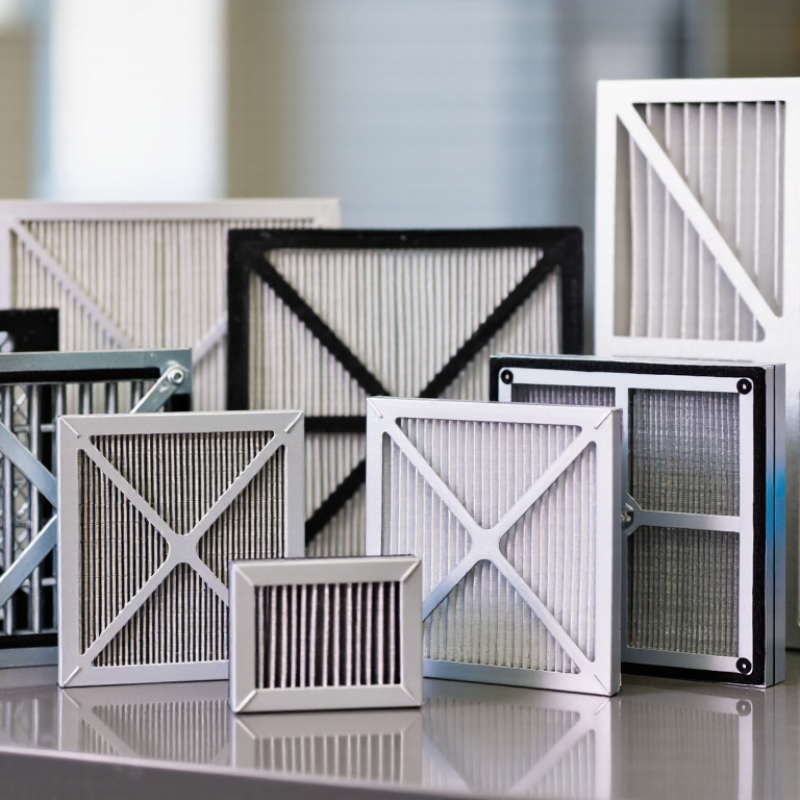
Metal HVAC Filters Explained: Construction, Reusability, and Applications
Metal HVAC filters usually combine a rigid aluminum, galvanized-steel, or stainless-steel frame with expanded metal mesh. Some designs include layered wire screens or washable synthetic media. This structure resists moisture, heat, and repeated handling better than many disposable frames. Fit matters. A small perimeter gap can allow unfiltered air to bypass the media. ASHRAE Standard 52.2 evaluates particle removal through MERV ratings, but the rating alone does not confirm real-world performance.
Reusability is the main attraction. Technicians can remove the filter, rinse it, dry it completely, and reinstall it. EPA guidance identifies indoor pollutant concentrations as often two to five times higher than outdoor levels, so maintenance cannot be treated casually. Wet media can support contamination and increase pressure drop. The U.S. Department of Energy reports that heating and cooling represent nearly half of a typical home’s energy use. A clogged reusable filter may quietly raise fan energy and reduce airflow.
Metal filters suit commercial kitchens, workshops, industrial air handlers, and dusty environments. Grease-heavy applications require deeper cleaning and careful disposal of wash water. Stainless steel offers strong corrosion resistance, while aluminum reduces weight. Cost calculations should include labor, cleaning equipment, water, and replacement parts. A reusable filter is not automatically greener. That assumption needs checking. Maintenance logs, pressure readings, and scheduled inspections provide stronger evidence than appearance alone. Some washable filters also clean less efficiently after repeated damage, which is an easy detail to overlook.
Metal HVAC Filters Explained: MERV Efficiency Benchmarks
Minimum particle-removal efficiency for particles 3–10 μm, by MERV rating: MERV 8 requires at least 70%; MERV 11 and MERV 13 require at least 90%. A metal frame or washable mesh does not by itself determine a filter’s MERV rating—look for tested performance.
How to Compare 10 Leading Options by MERV Rating, Fit, and Pressure Drop
When comparing 10 metal HVAC filters for global buyers, start with the MERV rating, but do not treat it as the only measure.
MERV 8 may suit basic dust control, while MERV 11 or 13 captures finer particles for many commercial spaces.
Higher ratings can restrict airflow.
That trade-off matters.
Measure the filter slot, not the old filter alone.
A 24-by-24-inch opening may need a slightly smaller nominal filter for smooth installation. Check actual length, width, and depth. The frame should sit firmly without bending.
I have seen loose edges create bypass gaps, even with an impressive MERV rating.
Poor fit wastes performance.
Pressure drop separates a practical filter from a costly one.
Compare initial pressure-drop data at the same airflow, preferably in pascals and inches of water gauge. A manometer reading before and after installation gives useful field evidence. Recheck it after several weeks of dust accumulation.
Cleanable metal media can be durable, but washing may damage coatings or leave hidden moisture. That part is easy to underestimate.
Ask for test standards, airflow conditions, and replacement guidance from each supplier. Ratings are not always directly comparable across regions. Some specifications look precise, yet omit the airflow used during testing.
A careful buyer should question that gap.
ASHRAE 52.2 Data: MERV 13 Captures at Least 50% of 0.3–1 μm Particles
For global buyers comparing metal HVAC filters, MERV 13 deserves careful attention.
ASHRAE Standard 52.2-2017 requires MERV 13 filters to capture at least 50% of particles measuring 0.3–1 μm. This is the most penetrating particle size range in the test. Larger particles show higher removal performance.
The detail matters. A metal frame does not create MERV performance by itself. The complete filter assembly, including its collection media and sealing, must meet the tested rating. ASHRAE Handbook—HVAC Systems and Equipment, 2024, emphasizes that filtration efficiency must be considered alongside pressure drop and airflow. A filter may capture more particles while making a small blower work harder.
Fit matters greatly.
The U.S. Environmental Protection Agency’s Guide to Air Cleaners in the Home links practical performance with airflow, clean-air delivery, and proper installation. A 0.3–1 μm laboratory result cannot guarantee identical household performance. Dust loading, humidity, leakage, and replacement intervals change outcomes.
For example, a loose 600 × 600 mm filter can bypass air around its edges. I would measure pressure drop before and after installation, then inspect the gasket after several weeks. That extra check is easy to skip, and that is probably the weak point in many comparisons. A washable metal filter can also look durable while providing limited fine-particle capture unless its tested MERV rating is clearly documented.
Global Buyer Checklist: Dimensions, Metal Types, Corrosion, and Compliance
10 Best Metal HVAC Filters for Global Buyers
A reliable purchase begins with exact dimensions, not a product photo. Measure the opening, frame depth, airflow direction, and available service space. Record face width and height separately. A two-millimeter error can create bypass air around the filter. That gap may carry dust into coils and occupied rooms. Confirm the filter’s pressure drop at the intended airflow. Low resistance is useful, but thin metal alone does not guarantee performance.
Metal choice should match the installation environment. Galvanized steel suits many indoor systems and offers a practical balance of strength and cost. Aluminum is lighter and handles moisture reasonably well. Stainless steel is stronger against corrosion, especially near salt air, wash-down areas, or humid production spaces. Coating quality still matters. Inspect folded edges, welds, and drain points, where corrosion often begins. Coastal buyers should request salt-spray or corrosion-test evidence when available.
Compliance documents deserve the same attention as the filter itself. Ask for material declarations, test methods, airflow data, and traceable batch information. Requirements may differ between commercial buildings, healthcare facilities, and industrial sites. Check local fire, ventilation, electrical, and environmental rules before ordering large quantities. Import paperwork and recycling expectations can also affect delivery. In practice, specifications are sometimes incomplete. I have seen buyers approve a sample, then discover that its depth blocks the access panel. Recheck the installed space. No checklist catches every mismatch.
Installation and Maintenance: Match Airflow and Follow Cleaning Specifications
A metal HVAC filter must fit the system’s airflow, not just the return grille. Check the equipment manual for the filter size, maximum pressure drop, and any approved efficiency range. ASHRAE Standard 52.2 rates particle removal by size: a MERV 13 filter captures at least 50% of 0.3–1.0 micrometer particles and at least 90% of 3–10 micrometer particles under test conditions. That rating does not guarantee suitable airflow in every unit. A dense or undersized filter can restrict flow. Small checks matter. Confirm the filter sits flat, with no gaps around its frame.
Follow the filter maker’s cleaning instructions and the HVAC unit’s service schedule. If the guidance permits rinsing, remove loose dust first, wash gently, and let the filter dry completely before reinstalling it. Damp metal can encourage corrosion or carry moisture into the system. Do not add oil or harsh cleaners unless the instructions specifically allow them. After installation, check for rattling and compare airflow at nearby vents with normal operation. A simple pressure reading across the filter can help identify excessive resistance, but readings should be judged against the unit’s specifications. It is easy to assume a washable filter lasts indefinitely; it still needs inspection for bent mesh, damaged seals, and persistent buildup.
10 Best Metal HVAC Filters for Global Buyers - Installation and Maintenance: Match Airflow and Follow Cleaning Specifications
| Filter option |
Typical metal construction |
Common nominal size |
Illustrative airflow at 300 / 500 ft/min |
Installation and maintenance guidance |
| 1. Aluminum mesh panel |
Layered or corrugated aluminum mesh in a rigid frame |
16 × 20 in |
About 667 / 1,111 CFM |
Fit with the airflow arrow pointing toward the blower or equipment. Clean only by the supplier’s method; dry fully before reinstalling. |
| 2. Aluminum expanded-metal panel |
Expanded aluminum layers held in a washable frame |
20 × 20 in |
About 833 / 1,389 CFM |
Check that the frame sits securely without gaps or buckling. Rinse or wash only if permitted by the cleaning instructions. |
| 3. Galvanized-steel mesh panel |
Metal mesh in a corrosion-resistant steel frame |
20 × 25 in |
About 1,042 / 1,736 CFM |
Verify the actual opening and filter depth before ordering. Inspect for corrosion, damaged mesh, and loose fasteners during cleaning. |
| 4. Aluminum frame with removable mesh |
Reusable aluminum frame with a replaceable or removable metal screen |
24 × 24 in |
About 1,200 / 2,000 CFM |
Reassemble the screen in its original orientation and secure all clips. Do not operate the system with a missing or loose screen. |
| 5. Stainless-steel mesh panel |
Stainless-steel mesh and frame for applications needing greater corrosion resistance |
20 × 20 in |
About 833 / 1,389 CFM |
Confirm material compatibility with the installation environment. Use only cleaning agents approved for the metal and finish. |
| 6. Deep-frame washable metal filter |
Deeper metal frame with multiple mesh layers; construction varies by supplier |
16 × 20 in; verify depth |
About 667 / 1,111 CFM* |
Match the full frame depth to the rack. More layers can affect resistance, so check the product pressure-drop data at the intended airflow. |
| 7. Heavy-duty metal-frame panel |
Reinforced metal frame with washable mesh media |
20 × 25 in |
About 1,042 / 1,736 CFM |
Use the specified retainers so the panel cannot shift under airflow. Check frame joints and mesh tension after each service. |
| 8. Multi-layer aluminum panel |
Several aluminum mesh layers within a rigid metal frame |
24 × 24 in |
About 1,200 / 2,000 CFM* |
Confirm allowable airflow and pressure drop for the exact model. Clean gently to avoid flattening or separating the layers. |
| 9. Metal filter with drainable frame |
Washable mesh panel with a frame designed to shed rinse water |
20 × 20 in |
About 833 / 1,389 CFM* |
Follow the indicated drain orientation during washing and drying. Reinstall only when the filter is fully dry. |
| 10. Custom-size metal panel |
Aluminum or steel frame with mesh selected for the application |
Made to measured opening |
Calculate from measured face area and required velocity |
Measure the rack, not just the old filter label. Specify actual dimensions, thickness, airflow direction, and cleaning requirements when ordering. |
Selection and service notes: Airflow figures are illustrative calculations using nominal face dimensions and the stated face velocities: CFM = face area in square feet × face velocity in feet per minute. They are not product ratings or recommended operating points. Actual dimensions can differ from nominal sizes; check the filter, rack, equipment airflow, and manufacturer pressure-drop specifications before installation. Clean at the interval and by the method specified for the exact filter, checking more often in dusty or high-use conditions. A washable metal panel should not be assumed to provide the same particle filtration as a higher-efficiency filter.
* Airflow calculation uses nominal face area only; actual airflow suitability depends on the specific filter construction and HVAC system.
Conclusion
Metal Hvac Filters are reusable air-filtration components made with durable metal frames and mesh or layered media. Their performance depends on more than construction: buyers should compare MERV ratings, dimensions, fit, and pressure drop to find an option that suits the system’s airflow and filtration needs. Under ASHRAE 52.2, a MERV 13 filter captures at least 50% of particles in the 0.3–1 μm size range, providing a useful reference when evaluating finer-particle performance.
For global purchasing, confirm the exact frame dimensions, metal type, corrosion resistance, and applicable product documentation before ordering. A filter that fits poorly or creates excessive resistance can affect system operation, so installation should follow the equipment’s airflow requirements and the filter’s specifications. Reusable filters also need cleaning at the recommended intervals and according to the maker’s instructions. Comparing these factors together helps buyers choose a practical filter for the intended application and maintain consistent performance over time.

 Snow Peak