What Are Custom HVAC Filters and How Do They Work?

Time:2026-10-25 Author:Mason
0%

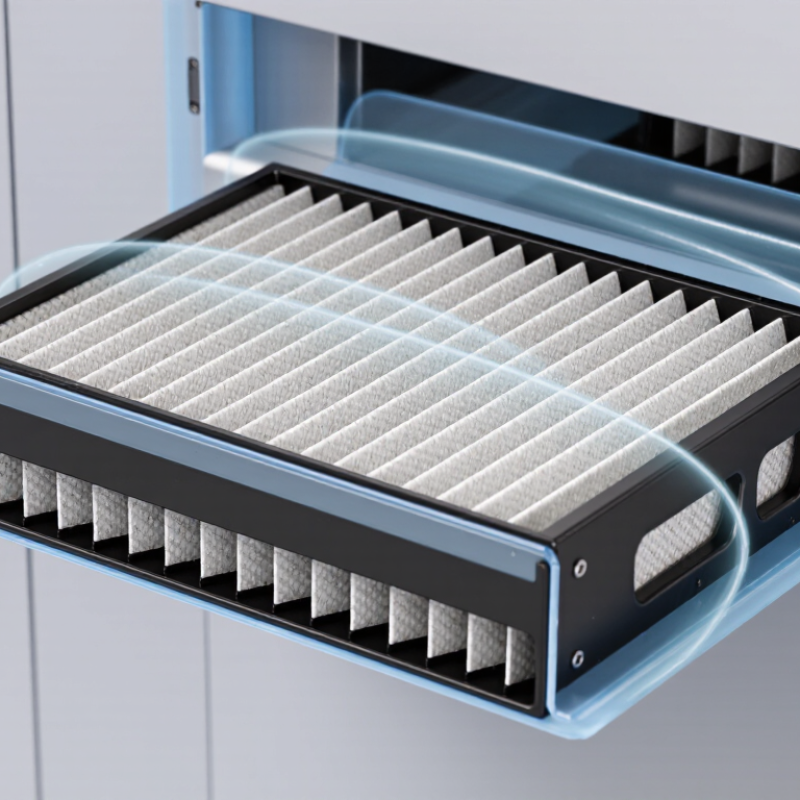
Custom Hvac Filters are purpose-built air filters designed for a system’s exact dimensions, airflow needs, and indoor air concerns. Unlike standard filters, they can use tailored depths, frames, pleats, and filtration media. A properly fitted filter should sit firmly inside the return grille or air-handler cabinet, without visible gaps around its edges. Small gaps matter because unfiltered air can bypass the media.

The U.S. Environmental Protection Agency reports that people spend approximately 90% of their time indoors, where pollutant levels can sometimes be two to five times higher than outdoors. This makes filtration an important part of indoor environmental quality, although filters are not a complete ventilation strategy. ASHRAE Standard 52.2 evaluates filter performance through Minimum Efficiency Reporting Values, or MERV ratings. Higher efficiency can capture smaller particles, but it may also increase resistance to airflow. That trade-off deserves attention.

Here is the practical mechanism. Air moves through layered fibers, while particles are captured by interception, impaction, diffusion, and, in some designs, electrostatic attraction. As dust accumulates, pressure drop usually increases. The U.S. Department of Energy warns that restricted airflow can reduce HVAC performance and raise operating costs. Customization therefore should match the equipment, not simply chase the highest rating.

That distinction is easy to miss.

A careful specification considers filter size, MERV level, fan capacity, replacement frequency, and the manufacturer’s pressure-drop data. In real buildings, a perfectly selected filter can still fail when maintenance is irregular. Reliable results require measurement, inspection, and periodic reassessment.
What Are Custom HVAC Filters and How Do They Work?

Custom HVAC Filters Defined: MERV Ratings from 1 to 20 and Their Meaning

What Are Custom HVAC Filters and How Do They Work?

Custom HVAC filters are built to match a system’s exact frame size, airflow direction, and installation depth. They use selected filter media to capture airborne particles before air returns through the equipment. A poor fit can leave visible gaps. Even a high-rated filter may then perform poorly.

MERV means Minimum Efficiency Reporting Value. ASHRAE Standard 52.2 rates filters from MERV 1 through MERV 16. Lower ratings target larger dust and lint. MERV 9–12 captures more particles between 1 and 3 microns. MERV 13–16 offers stronger performance against smaller particles, including many fine aerosols. The U.S. Environmental Protection Agency recommends MERV 13, or the highest compatible rating, for many residential systems. Ratings from MERV 17–20 are commonly linked with HEPA or ULPA-grade filtration. They need careful verification because they are not part of ASHRAE’s regular MERV scale. Higher efficiency can also increase resistance. That assumption deserves a second look.

Tips: Check the filter’s dimensions, airflow arrow, and replacement date. Ask a qualified technician to measure pressure drop. A filter that reduces airflow may raise energy use and strain the blower. I would not choose MERV 20 automatically. System capacity matters more than a dramatic number. EPA guidance and ASHRAE testing methods provide useful references, but real homes still differ in dust levels, humidity, and equipment condition.

Filter Media and Particle Capture: How Fiberglass, Pleated, and HEPA Designs Work

Custom HVAC filters are made to fit a specific return grille, air handler, or furnace cabinet. Accurate dimensions matter. A small gap can let dusty air bypass the filter. Filter media then determines how particles are captured and how much resistance the blower faces.

Fiberglass filters use coarse, layered strands. They catch larger dust, lint, and debris through direct interception. Their low resistance supports steady airflow, but they capture fewer fine particles.

Pleated filters fold synthetic or cotton-like media into many channels. This increases surface area without enlarging the frame. As air moves through the folds, particles collide with fibers, stick to them, or become trapped in the media. More folds usually improve capture, although airflow can drop when the filter loads with dust.

HEPA designs use dense, finely arranged fibers and several capture methods. Particles are intercepted, impacted, or held by diffusion. Properly tested HEPA media can remove at least 99.97% of particles around 0.3 microns under its rated conditions.

That sounds absolute. It is not. A poorly sealed frame, overloaded filter, or weak air handler can reduce real-world performance. I would check static pressure after installation, especially in older systems. A custom filter should protect indoor air quality without forcing the blower to struggle. That balance is easy to overlook.

Sizing and Airflow: Why Correct Dimensions Prevent Bypass and Energy Loss

Custom HVAC filters are made to match an air handler’s exact opening, not a convenient shelf size. Correct dimensions matter because even a small gap can let air escape around the filter. This bypass carries dust, pollen, and fine particles into the system. The filter may look clean while the coil and ductwork collect contamination. That wastes filtration performance and increases cleaning needs.

Measure the frame’s length, width, and actual thickness with a tape measure. Do not rely only on the label. Frames can swell, shift, or hold the filter loosely over time. A filter that is too thick may restrict airflow and strain the blower. A filter that is too thin may rattle and permit leakage. Air should pass through the media, not around it.

I have seen technicians find bypass marks along one dusty edge. That pattern often reveals a poor fit better than a quick visual check. Sealing gaps and confirming the airflow direction can improve system stability. However, higher filtration is not automatically better. Pressure drop must suit the equipment and duct design. An airflow test is more reliable than guesswork, though field measurements are not always perfect. A careful installer should inspect the rack, fan operation, and return grille before selecting the final filter size.

Efficiency Versus Pressure Drop: ASHRAE Guidance for HVAC Filter Selection

Custom HVAC filters are made to match an air handler’s exact dimensions, airflow, and operating conditions. They may use nonstandard sizes, deeper media, special frames, or higher-efficiency materials. A precise fit matters. Gaps around a filter can let particles bypass the media, even when the filter itself performs well.

Efficiency must be balanced against pressure drop. ASHRAE Standard 52.2 evaluates filter performance across three particle-size ranges. Under its published MERV table, a MERV 13 filter captures at least 85% of particles from 1 to 3 micrometers and at least 90% from 3 to 10 micrometers. However, greater resistance can reduce airflow and increase fan demand. The 2022 ASHRAE Handbook therefore emphasizes checking both initial and final pressure drop against the system fan curve. Small details matter.

A practical selection starts with measured airflow, available filter depth, and the equipment’s allowable resistance. A pressure gauge across the filter can reveal loading before comfort problems appear. The U.S. Department of Energy reports that fans can represent roughly 10% to 20% of commercial building electricity use, so avoid choosing efficiency by rating alone. Field conditions are less tidy than catalog tests. Humidity, dust loading, poor sealing, and irregular maintenance can change results. I have seen a technically suitable filter perform poorly after a loose rack created a visible bypass path. Customization helps, but it cannot repair an undersized fan or neglected maintenance schedule.

Maintenance and Replacement: How Loading Affects Indoor Air Quality and System Performance

Custom HVAC filters are made to match a system’s exact length, width, depth, and airflow direction. Their performance changes as dust loads the media. A clean filter captures particles while allowing steady airflow. A loaded filter creates greater resistance across the return grille.

The calendar is useful, but it can lie. A lightly used home may need replacement less often than a busy workshop. Field technicians commonly inspect the filter monthly, especially during heavy cooling or heating seasons. The U.S. Environmental Protection Agency reports that indoor pollutant levels can be two to five times higher than outdoors, and sometimes much higher. A neglected filter may allow dust to settle on coils, blowers, and ducts. It can also make rooms feel unevenly conditioned.

ASHRAE Standard 52.2 evaluates particle removal through MERV testing, but efficiency is only one part of the decision. Higher filtration can increase pressure drop when the system was not designed for it. The U.S. Department of Energy identifies dirty filters as a cause of reduced airflow and system efficiency. Checking the filter’s surface, airflow, and pressure drop is more reliable than guessing. Look for gray loading, weak supply airflow, or longer run times. Replace the filter when loading approaches the equipment manufacturer’s limit. Not every “high-efficiency” filter improves real-world performance. That assumption deserves review.

What Are Custom HVAC Filters and How Do They Work? — Maintenance and Replacement: How Loading Affects Indoor Air Quality and System Performance

Typical values are planning ranges. Actual pressure drop, service life, and removal performance depend on filter area, airflow, dust loading, humidity, installation quality, and the specific HVAC system.
Filter or Loading Condition How It Works Typical Particle or Dust Control Typical Initial Pressure Drop* Effect as the Filter Loads Indoor Air Quality Impact System Performance Impact Maintenance or Replacement Guidance
Clean custom filter A filter manufactured or selected to match the HVAC opening, airflow requirement, and available rack depth. Air passes through the media while particles are captured by interception, impaction, diffusion, and, in some products, electrostatic attraction. Captures airborne dust, lint, and other particles according to its tested efficiency rating. A higher efficiency rating generally provides greater removal of fine particles when the system is designed to support it. Commonly about 0.10–0.25 in. w.g. at rated airflow for many pleated residential filters; the actual value varies by size, media, and airflow. Loading has not yet significantly restricted airflow. The filter can collect particles while maintaining the system’s intended air volume. Helps reduce recirculated particulate matter and protects indoor surfaces and HVAC components from dust accumulation. Supports expected airflow, temperature control, fan operation, and heat-transfer performance when correctly sized and installed. Confirm that the filter fits tightly without bypass gaps. Check the airflow direction arrow and record the installation date.
Lightly loaded filter Dust begins to cover portions of the media surface and the filter’s effective resistance gradually increases. Particle capture may remain effective, but airflow resistance is higher than when the filter was clean. Often approximately 0.15–0.35 in. w.g., depending on the filter design and operating airflow. The blower may need to work harder. Airflow can begin to decline, especially in systems with undersized ducts, dirty coils, or limited fan capacity. Filtration may still be adequate, but reduced air circulation can create uneven temperatures and slower removal of indoor pollutants. Longer operating cycles, reduced cooling or heating capacity, and increased fan energy use may occur. Inspect monthly during heavy-use periods. Do not judge condition by color alone; visible dust does not always indicate the exact replacement point.
Heavily loaded filter Dust and fibers occupy a substantial portion of the media surface, reducing the open area available for air passage. The filter may continue to capture particles, but its increased resistance can reduce the amount of air passing through the filter. Commonly above 0.35 in. w.g.; the final value must be measured for the specific system and filter. Noticeable airflow reduction, higher fan strain, and possible air leakage around the filter or through unintended cabinet gaps. Lower air exchange through the HVAC system can allow particles and odors to remain indoors longer. Air bypass can also allow unfiltered air around the media. Reduced heating or cooling output, coil icing risk in cooling mode, overheating risk in some heating systems, and higher operating costs. Replace promptly when the filter is visibly obstructed, airflow is reduced, or the system’s measured pressure drop approaches the equipment manufacturer’s limit.
Overloaded or collapsed filter The media is severely blocked, distorted, wet, or damaged. In extreme cases, the filter may bend, collapse, or pull away from its frame. Effective filtration becomes unreliable because airflow can be severely restricted or can bypass the damaged media. May exceed the system’s allowable pressure-drop limit; no single value applies to all HVAC equipment. The blower can operate outside its intended conditions. Severe restriction or bypass may occur, and protective controls may shut down the equipment. Pollutant removal and distribution of conditioned air can deteriorate. Moisture problems may develop if cooling airflow is inadequate. Risk of loss of capacity, component damage, nuisance shutdowns, coil icing, overheating, and premature fan wear. Turn off the system if necessary, replace the filter immediately, investigate moisture or abnormal dust sources, and have airflow checked by a qualified technician.
Incorrect custom dimensions The filter has the wrong length, width, thickness, or frame configuration for the filter rack or air handler. Even a high-efficiency filter cannot perform as intended if air can flow around its edges. The filter’s measured pressure drop may appear normal while unfiltered bypass air remains significant. Air takes the path of least resistance through gaps, warped frames, or an improperly seated filter. Dust and fine particles can enter the return-air path without passing through the filter, reducing practical filtration performance. Dust may accumulate on the blower, evaporator coil, heat exchanger, and duct surfaces, reducing efficiency and increasing maintenance needs. Measure the existing opening and rack carefully. Verify actual dimensions, not only the nominal size printed on the old filter.
Higher-efficiency replacement A denser or more deeply pleated media provides more particle-capture capability, but it can also create greater resistance if the system is not designed for it. Depending on the tested rating, may improve removal of smaller particles such as fine dust, some smoke particles, and allergens. Varies widely; a deeper or larger filter often has lower resistance than a thin filter with similar efficiency because it provides more media area. A filter with insufficient surface area may load quickly and produce excessive pressure drop even when new. Potentially improves particulate control when installed correctly and operated at the required airflow. If resistance is too high, airflow, comfort, equipment capacity, and energy performance may worsen rather than improve. Check the HVAC manufacturer’s permitted filter efficiency and pressure-drop limits. Do not upgrade solely by choosing the highest rating available.
Large-area or deeper custom filter Uses a larger media surface or deeper pleats to provide more particle-holding capacity and lower face velocity at the same airflow. Can maintain filtration performance for longer than a smaller filter of similar efficiency, subject to the dust load and operating schedule. Often lower than an equivalent-efficiency filter with less media area, but the exact pressure drop must be obtained from the filter test data. More dust can be held before airflow resistance reaches the replacement threshold, although it is not maintenance-free. More consistent particle removal may be possible because the filter can operate longer before severe loading occurs. May help preserve airflow and reduce replacement frequency when the cabinet and equipment are compatible. Confirm that the deeper filter fits the rack, seals correctly, and does not obstruct access panels or manufacturer-required clearances.
Replacement interval based on conditions Service life is determined by dust loading and system operation rather than by a universal calendar interval. A clean filter generally provides more predictable airflow and filtration than an overdue filter. The most reliable replacement trigger is a measured pressure drop compared with the equipment or filter manufacturer’s limit. Homes with pets, construction dust, smoking, high occupancy, or frequent HVAC operation may load filters faster than low-dust environments. Timely replacement helps maintain particle removal and reduces the chance of pollutant bypass caused by a poorly seated or damaged filter. Regular replacement supports stable airflow, comfort, equipment reliability, and energy performance. Inspect at least monthly. Replace when loaded, damaged, damp, or when the recommended pressure-drop limit is reached; use the equipment manual for the final interval.
Technical note: Pressure drop is commonly reported in inches of water gauge (in. w.g.). Filter efficiency ratings and pressure-drop limits should be compared using the same test method and airflow conditions. A filter’s actual performance depends on the complete HVAC system, not on the filter rating alone.

FAQS

Why does a custom HVAC filter need accurate dimensions?

Exact length, width, and depth reduce bypass around the frame. Even a small gap can let dusty air escape filtration. Fit matters.

How do fiberglass filters capture particles?

Fiberglass filters use coarse, layered strands. They catch larger dust, lint, and debris through direct interception. Airflow usually remains steady. Fine-particle capture is limited.

How do pleated filters differ from fiberglass filters?

Pleated filters fold synthetic or cotton-like media into many channels. These folds create more surface area inside the same frame. Particles collide with fibers or become trapped. More folds may improve capture, but airflow can decline as dust builds.

What makes HEPA-style filtration highly efficient?

Dense, fine fibers use interception, impact, and diffusion. Properly tested media can remove at least 99.97% of particles near 0.3 microns. That figure is conditional. Poor sealing or weak airflow can reduce actual performance.

Can a highly efficient filter reduce HVAC airflow?

Yes. Dense media creates greater resistance. A loaded filter creates even more. The blower may work harder, while rooms receive weaker airflow. I would check pressure after installation, not trust the rating alone.

What should be checked before selecting a custom filter?

Measure airflow, filter depth, available space, and equipment resistance limits. Check the fan curve when possible. A pressure gauge across the filter provides useful evidence. Guessing can be expensive.

How often should an HVAC filter be replaced?

Inspect it monthly during heavy heating or cooling periods. Replacement timing depends on dust, occupancy, pets, and operating hours. A calendar alone can mislead. Gray loading, weak supply airflow, and longer run times signal attention.

What happens when a filter becomes heavily loaded?

Dust buildup increases pressure drop across the media. Airflow may weaken, and indoor temperatures can become uneven. Dust may settle on coils, blowers, and ducts. The filter can look acceptable while performance quietly worsens.

Does a higher-efficiency filter always improve indoor air quality?

Not always. A high-efficiency filter can perform poorly with bypass, excessive loading, or insufficient fan capacity. Sealing and maintenance matter. I might overestimate the filter if I ignore the whole system.

Conclusion

Custom Hvac Filters are air-cleaning components designed to match the specific dimensions, airflow needs, and filtration goals of an HVAC system. Their performance is commonly described through MERV ratings, which range from 1 to 20; higher ratings generally capture smaller particles but may create greater resistance to airflow. Different filter media provide different results: fiberglass filters offer basic protection, pleated filters provide more surface area for particle capture, and HEPA-style designs are intended for very fine particles.

Correct sizing is essential because gaps around an improperly fitted filter can allow unfiltered air to bypass the media, reducing indoor air quality and wasting energy. Filter selection should balance particle removal with pressure drop, following appropriate HVAC guidance and equipment limits. As dust accumulates, airflow resistance increases, which can reduce system efficiency and strain components. Regular inspection and timely replacement help maintain comfortable airflow, effective filtration, and reliable HVAC performance.


Mason

Mason

Mason is a seasoned marketing professional with a deep expertise in the company's offerings and a passion for driving brand awareness. With a strong background in digital marketing strategies, he has an innate ability to connect with diverse audiences and effectively communicate product benefits.......